Most agencies talk about AI. This is a full product I designed, built, shipped, and run on it.
KnightLeap.com is a live sprint-and-OKR platform for people who run several ventures at once. I didn't spec it for a client — I built it end to end (Rails 8, a custom design system, its own MCP server, deployed with Kamal) and I operate my whole business inside it every week. It's the clearest proof I can offer of how Knight Digital Partners builds today: AI woven into the product where it earns its keep, and disciplined engineering everywhere else.
AI where it removes work — not where it removes trust
Prioritization is where most backlogs rot: everyone argues, nobody scores. KnightLeap splits the job. AI reads your objectives and fills the inputs — revenue impact, strategic value, risk, effort. A deterministic WSJF formula does the ranking.
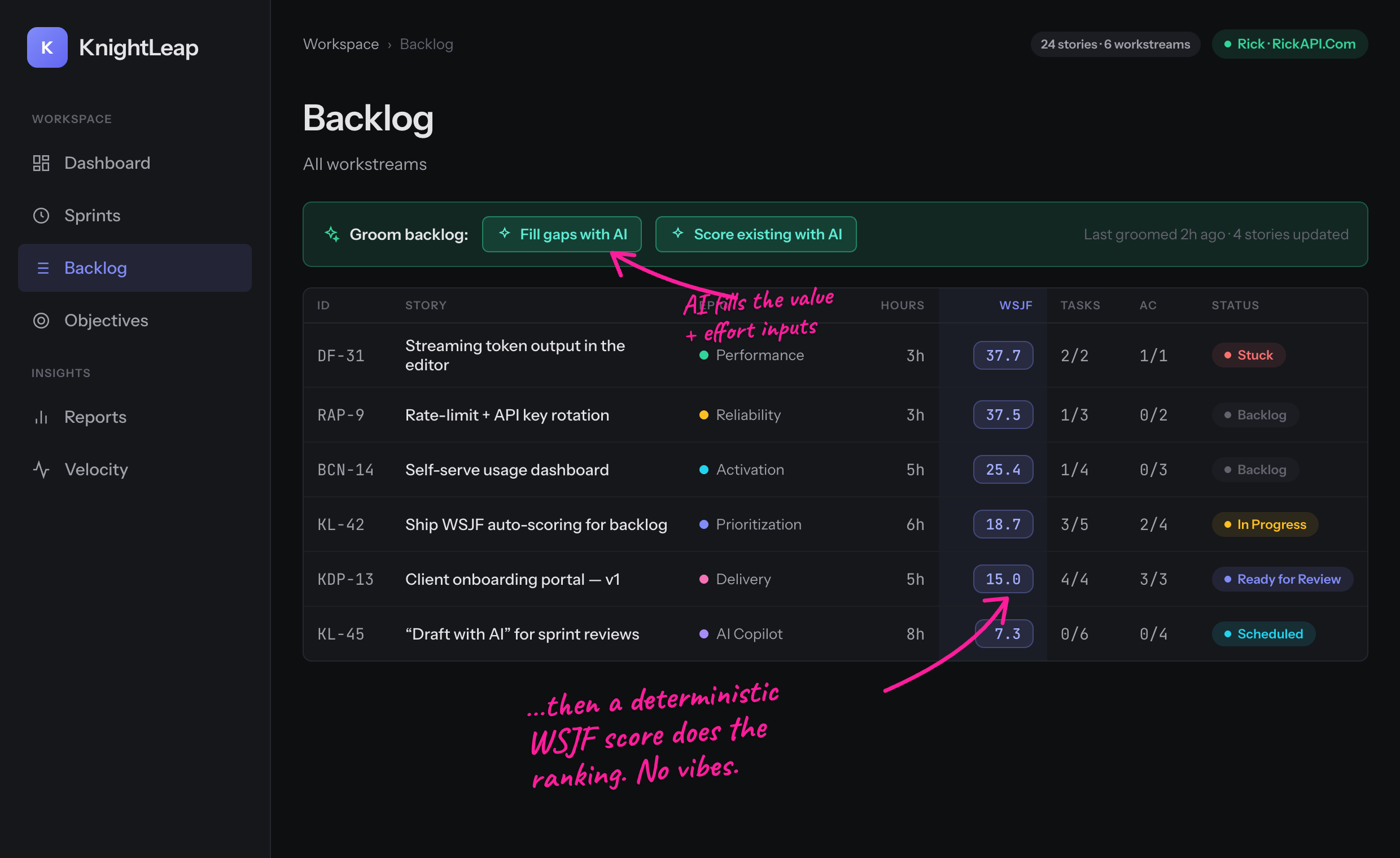
I know exactly where to put an LLM and where not to. AI handles the judgment-free grunt work; the decision that matters stays transparent and reproducible. That's the line every serious AI feature has to walk — and the same judgment I bring to client work.
Built to be driven by an AI agent
KnightLeap ships its own MCP server. That means I manage the entire roadmap — create stories, plan sprints, mark work shipped — from inside my AI coding agent, without ever opening the app.
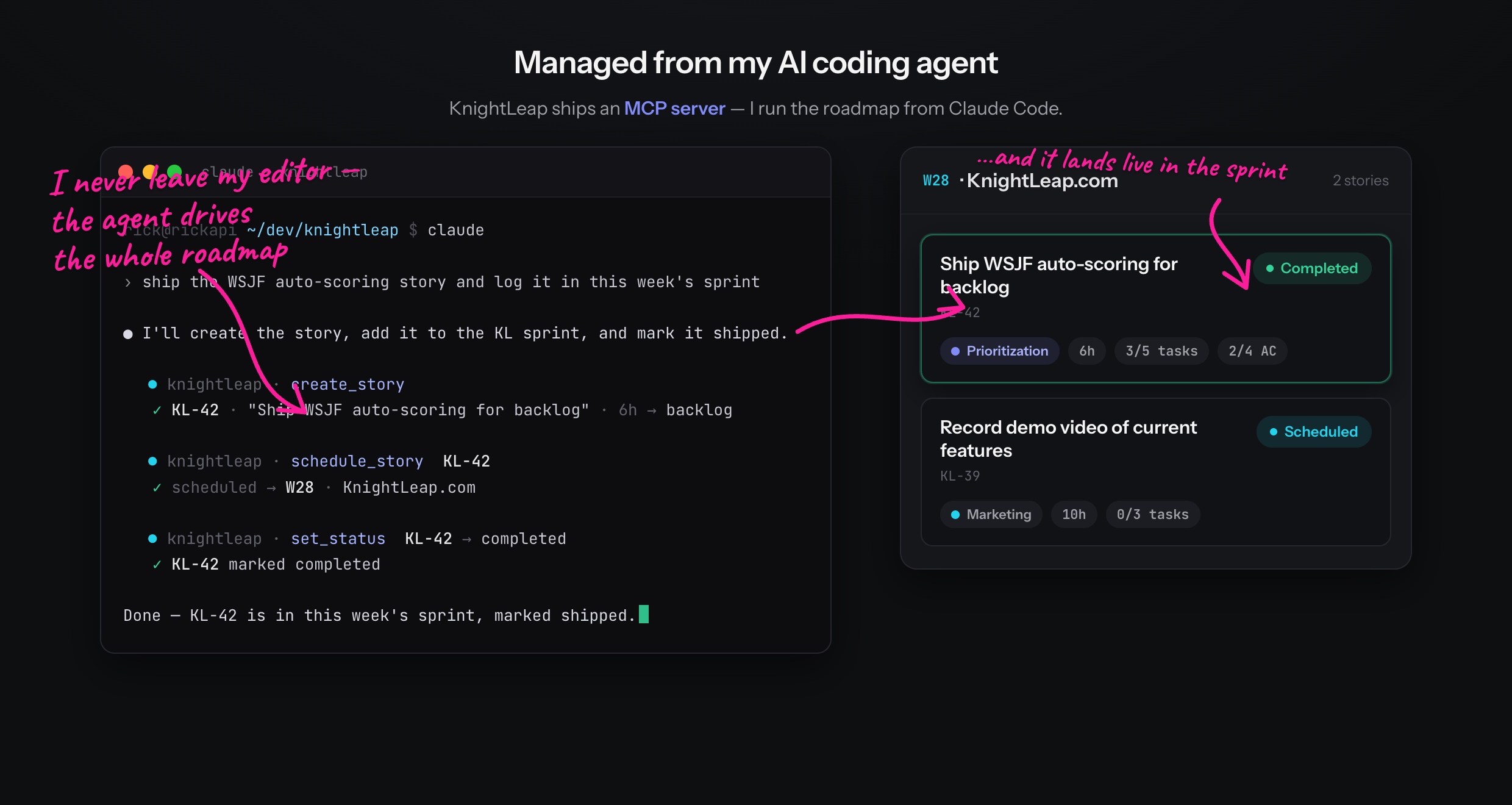
This is the leading edge, and I'm already building on it. Designing tool interfaces for agents — not just humans — is a genuinely new discipline: schemas, guardrails, idempotent actions. Very few teams have shipped a real MCP surface on a production app. I have, and I use it daily.
Products that tell the truth
Anyone can render a green dashboard. The harder, more valuable thing is a product that surfaces the inconvenient number. KnightLeap's Capacity Report compares, for every workstream and week, what was planned vs. committed vs. actually shipped.
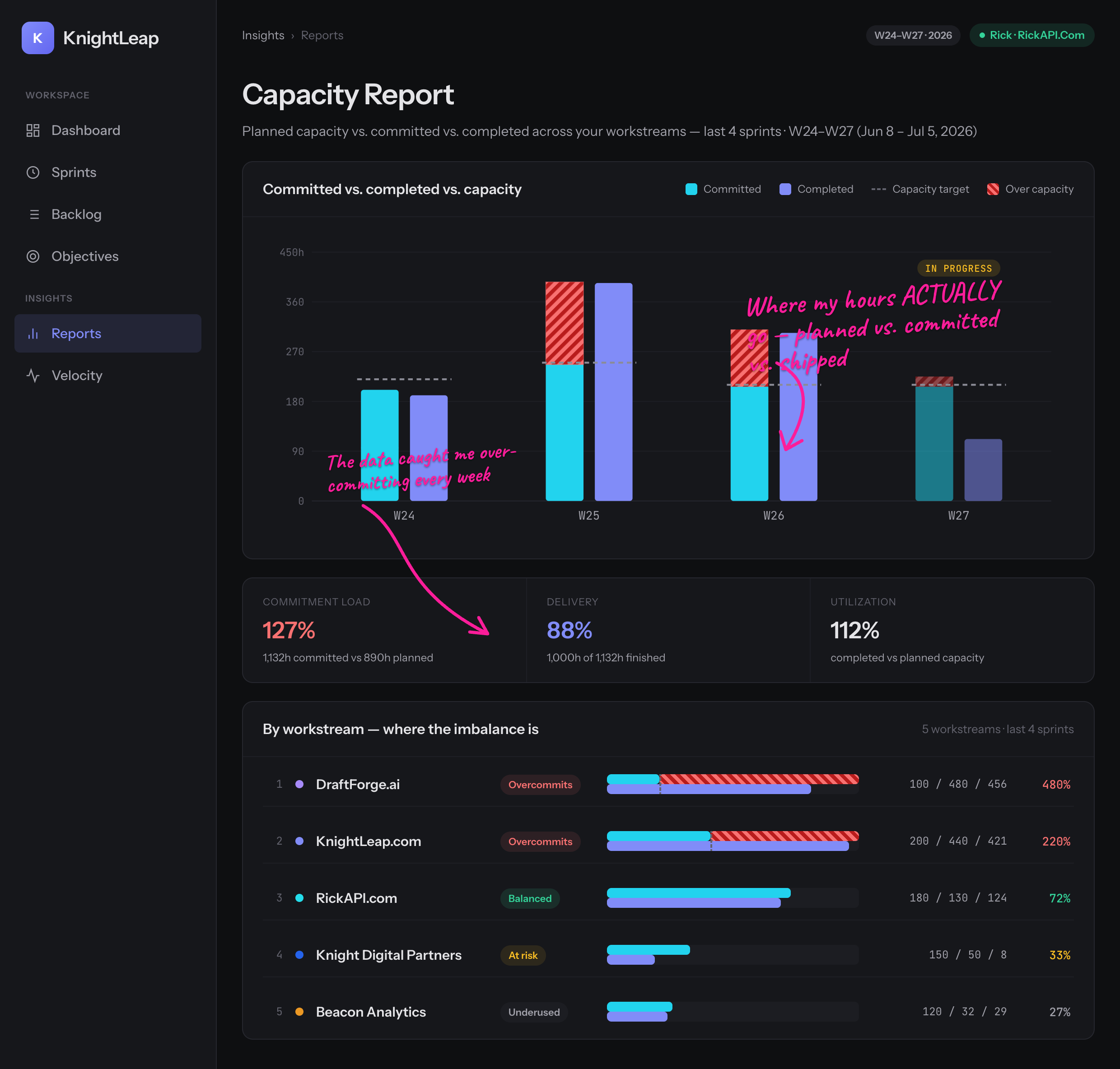
I build software that measures reality, not vanity. Turning raw operational data into an honest, decision-grade view — correct math, clear visualization, no spin — is exactly the kind of internal tool or client dashboard that changes how a business runs.
Strategy wired to execution
Quarterly objectives are only useful if they move with the work. In KnightLeap, OKRs are fed by the weekly sprints — each key result shows its pace, and you can trace it straight down to the story that moved it.
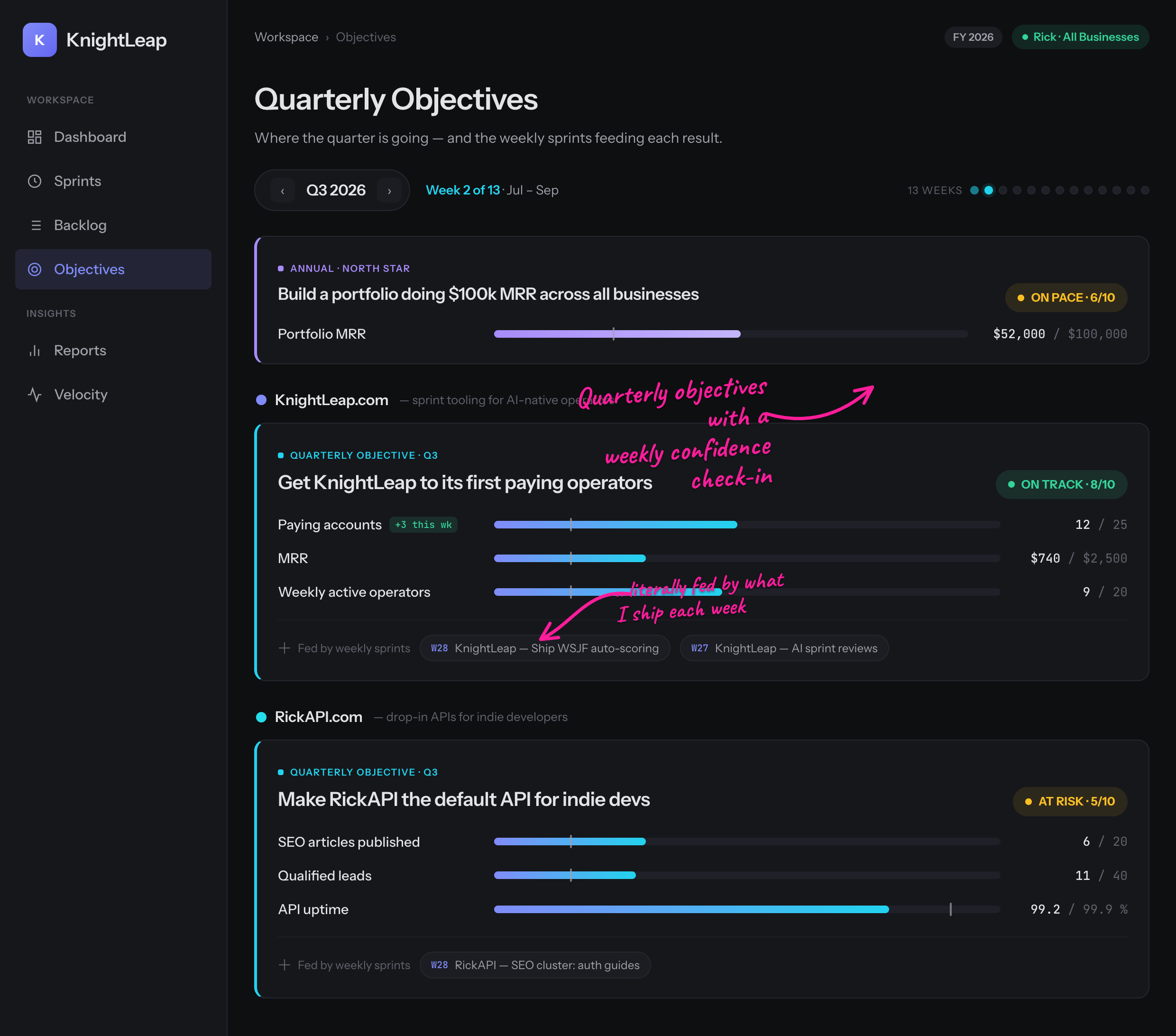
Systems thinking. I design products where the layers connect — strategy, planning, and execution stay in one loop instead of three disconnected spreadsheets. That coherence is the difference between software people tolerate and software people rely on.
Engineered for scale from day one
KnightLeap runs six of my workstreams — my own products and client engagements — in a single weekly view, with one honest capacity number across all of it.
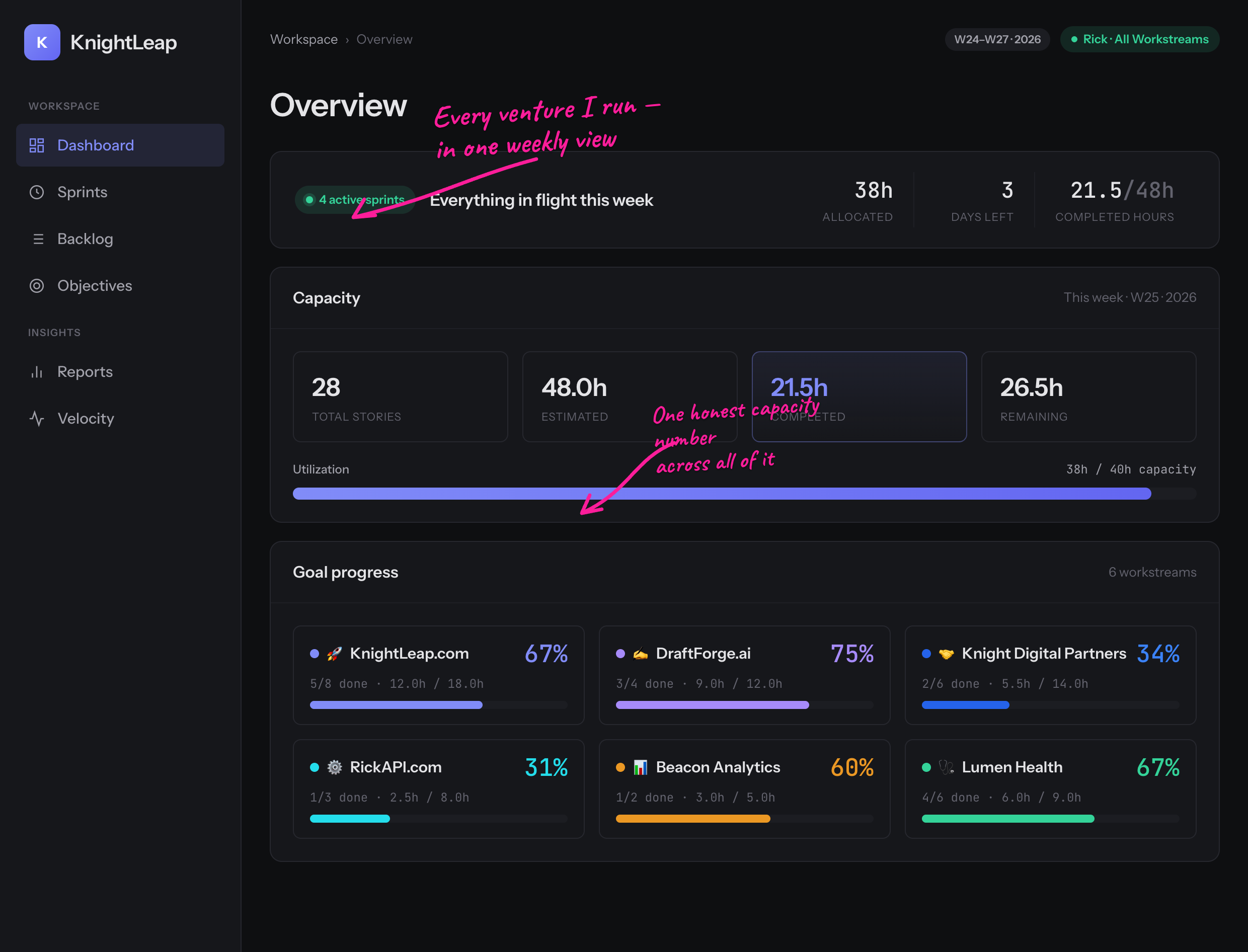
The architecture holds up under real breadth. Multi-tenant scoping, per-workstream rollups, and a shared capacity model that stays fast and correct — that's production engineering, not a prototype.
What this means for your project
KnightLeap isn't a case study I was hired to write. It's a product I bet my own operation on. If you want that standard of AI-native software built for your business, that's what Knight Digital Partners does.
See it live
The best proof is the running product. Take a look — then let's talk about building something to this standard for your business.
Visit knightleap.com →